
Families told independent researchers how they approach planning a funeral. Here are the findings that stood out to us.
If you've sat in an arrangement meeting, you'll know the question. "What would they have wanted?" Sometimes there's a clear answer written down. More often it's a half-remembered chat, a favourite song, or two siblings who remember things a bit differently.
We wanted to understand that moment better, so we asked independent research agencies HYFI and Curious Edge to look into it. In May 2026 they surveyed 602 people aged 40 and over across the UK. They were split into three groups of around 200 people each, so the findings reflect different experiences of a funeral.
Organisers had arranged a funeral, or helped to arrange one, in the last three years. They know first-hand what the decisions feel like.
Attendees had been to a funeral in the last three years but weren't involved in arranging it. They see a service from the congregation.
Forward planners hadn't arranged or attended a funeral recently, but had thought about or talked through their own wishes, or those of someone close to them.
You'll see these labels next to the quotes below. Where the groups answered differently, we've said so, and you'll probably recognise a lot of what people told the researchers.
Families want to know what's possible
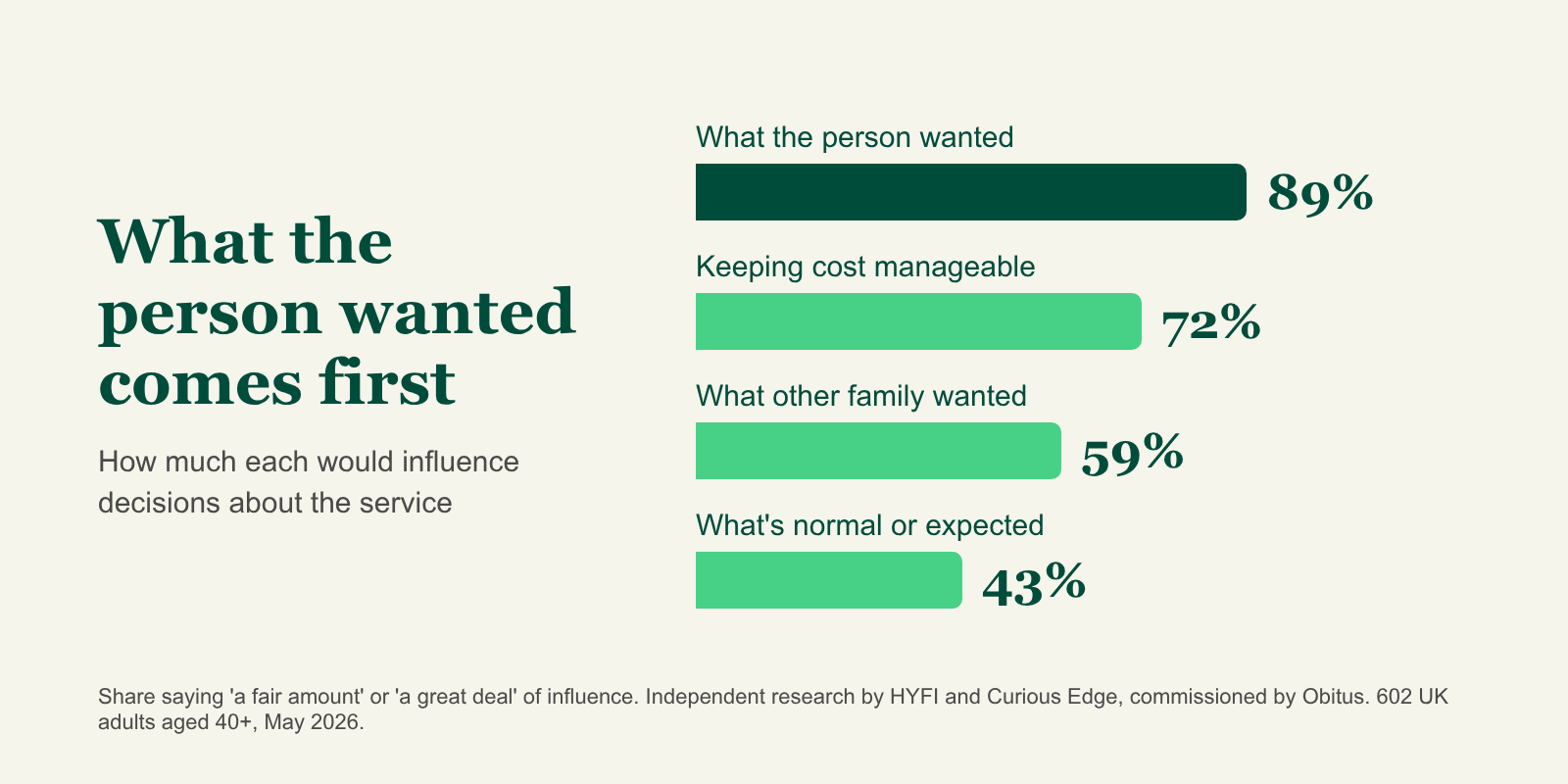
Doing right by the person matters more to families than anything else. 89% said the person's own wishes would guide their choices. That rose to 93% among attendees, and was a little lower among organisers (84%). Overall, it came ahead of cost (72%), the rest of the family's views (59%) and doing the "normal" thing (43%).
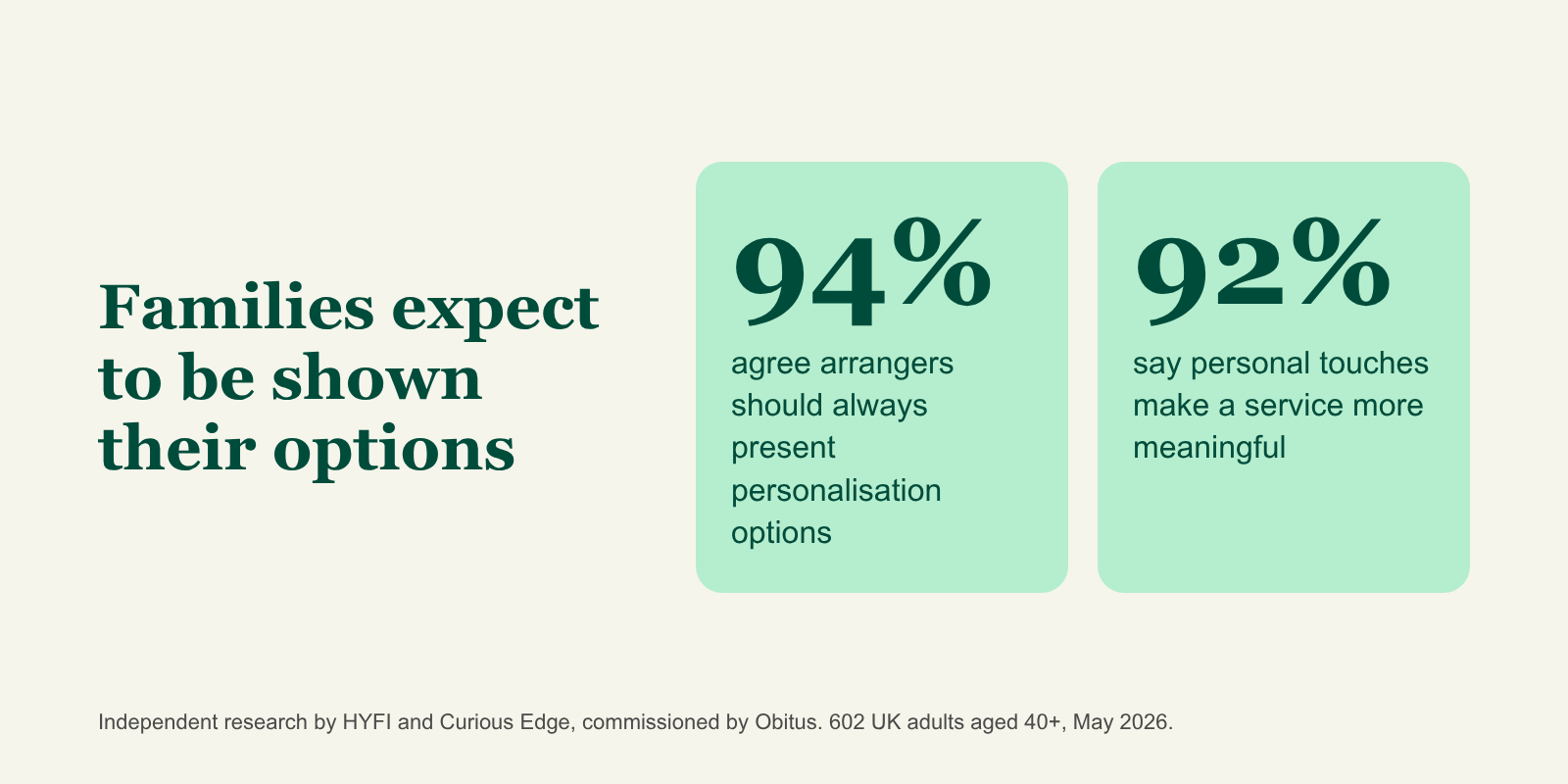
But people can only choose from what they know about. 94% agreed funeral arrangers should always talk families through the options for making a service personal, and 92% said those personal touches make a service mean more.
None of that will surprise you. It's the work you do every day. The part that struck us was how strongly people felt about being shown the options, rather than having to know to ask.
"The whole point is to say goodbye to the specific person, so surely it makes sense that it's all about the specific person." Attendee, aged 40–49
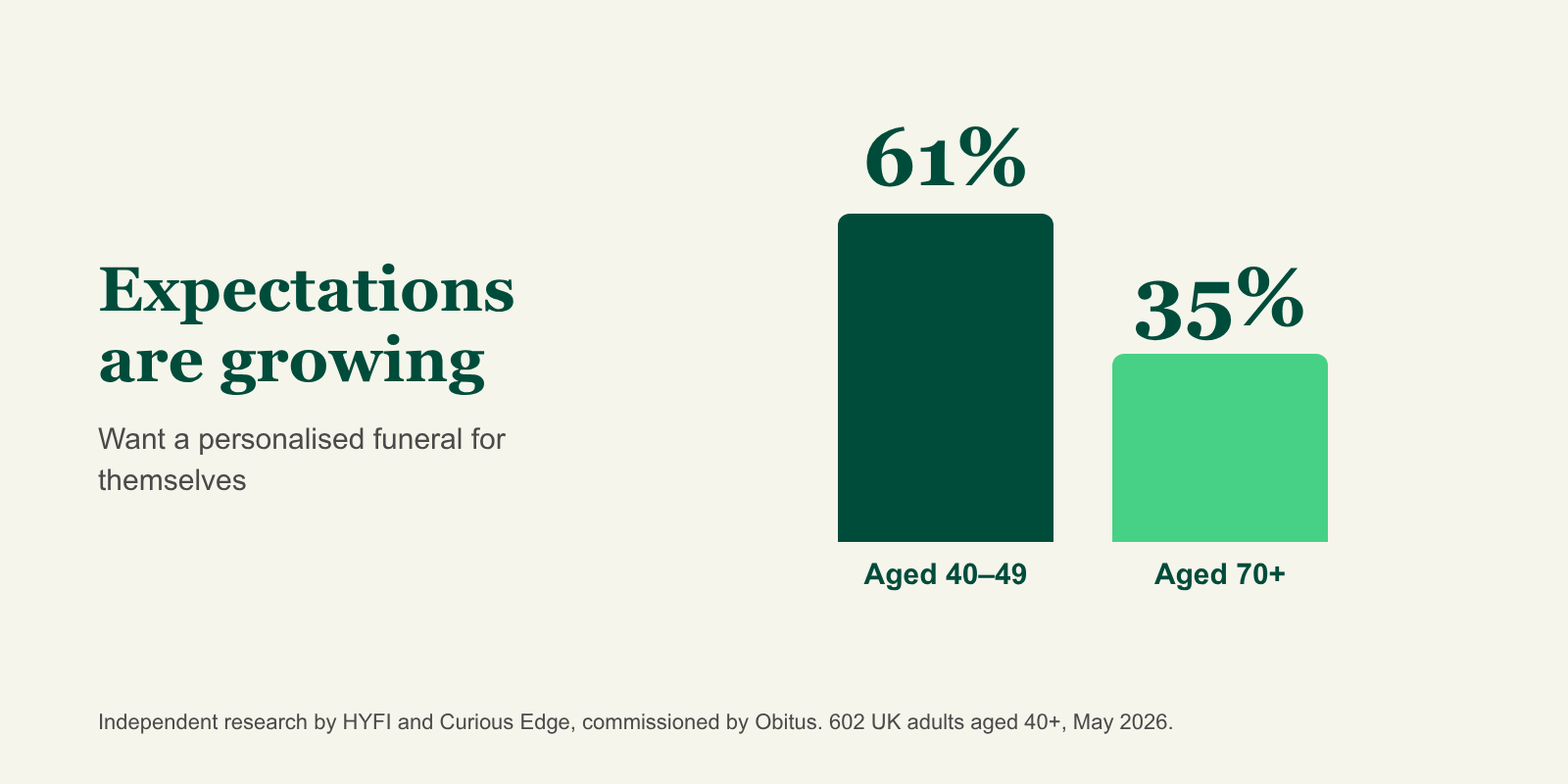
It looks set to grow, too. 61% of people in their 40s want a personalised funeral for themselves, compared with 35% of people over 70. They also expect more from a service: on average, people in their 40s rated 10 different parts of a funeral as important, against six for the over-70s.
What people remember
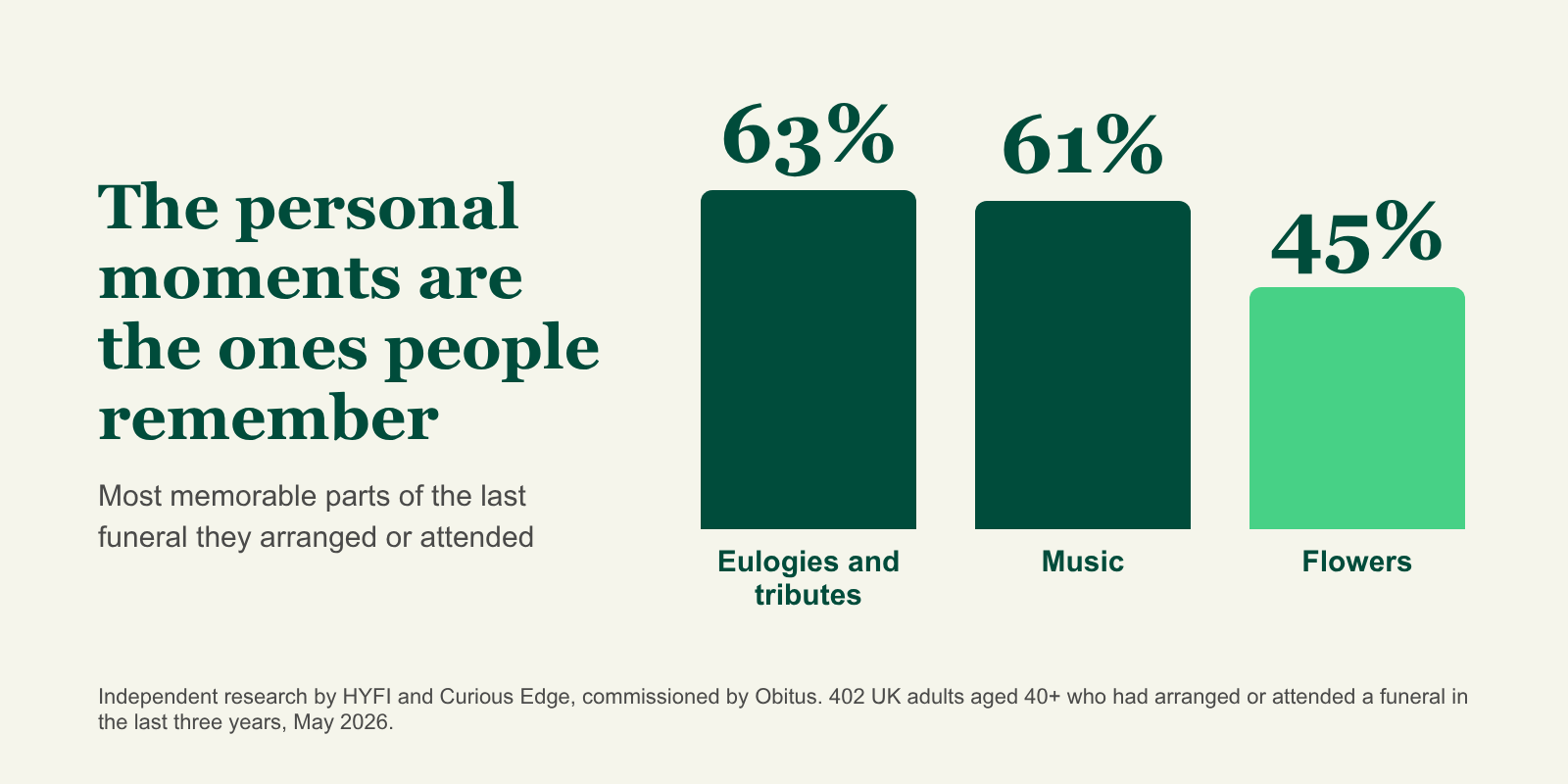
When people thought back to the last funeral they'd arranged or been to, the moments that stayed with them were the personal ones. The eulogies and tributes (63%) and the music (61%) came out on top, well ahead of the flowers (45%).
More broadly, 76% said personal touches like music, a photo tribute or a live stream are what they find most memorable at a funeral.
"People shouldn't die as part of a crowd. They should be held up and celebrated for the life they led as an individual." Forward planner, aged 60–69
The tribute gap
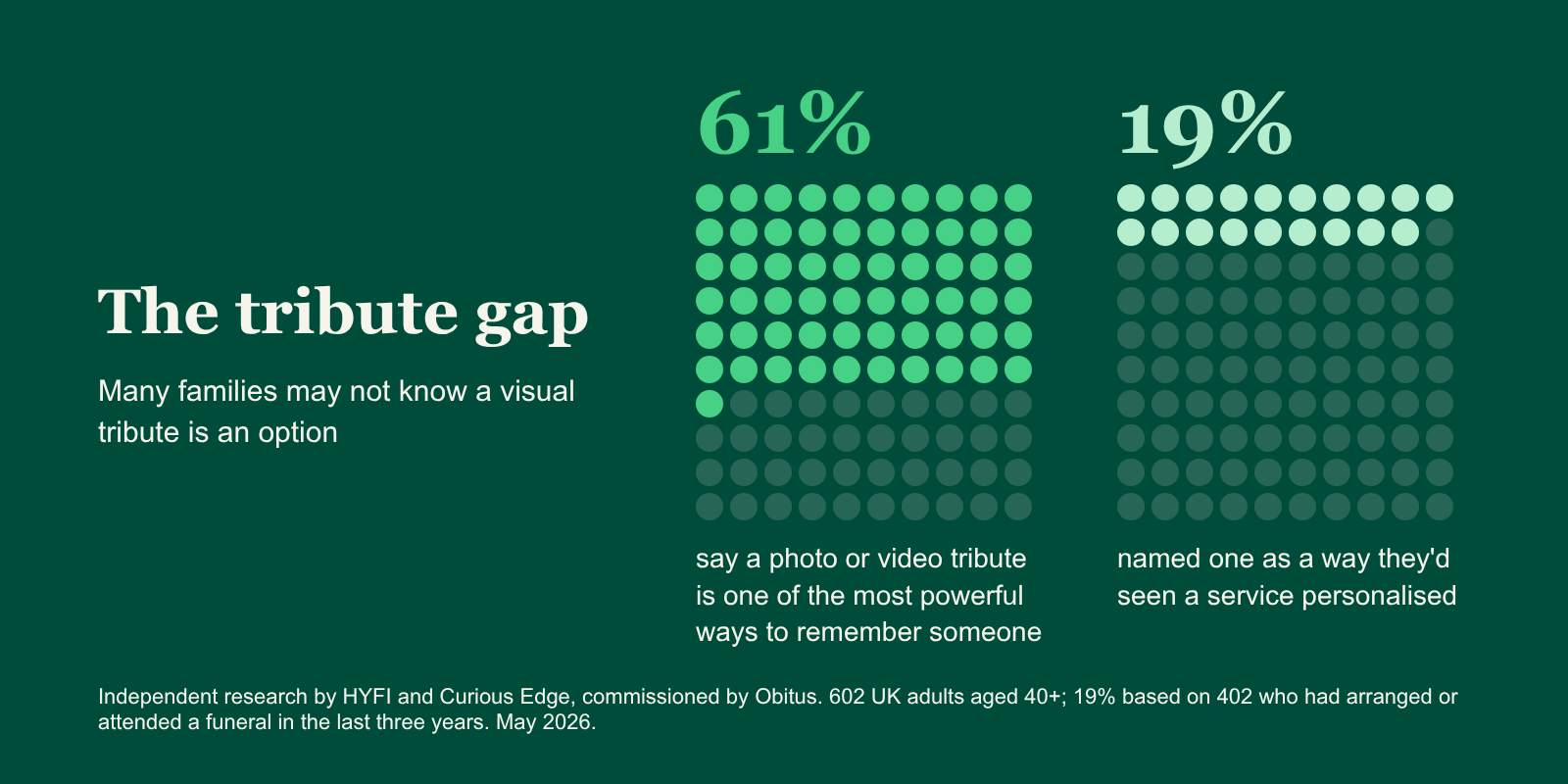
This is the finding we keep coming back to. 61% of people said a photo or video tribute is one of the most powerful ways to remember someone. But when people who'd recently arranged or been to a funeral were asked how they'd seen services personalised, only 19% mentioned a visual tribute.
We read that as potentially a gap in awareness, not interest. A lot of families just may not know a tribute is something they can have.
Music is often the easiest way into that conversation. It was the most valued part of a service, with 81% rating it as important, and 92% agreed the music played says a lot about who someone was.
"Nice to remember the music they liked. My dad liked 'I Can't Help Falling in Love', so we played that." Forward planner, aged 50–59
The conversation that often doesn't happen
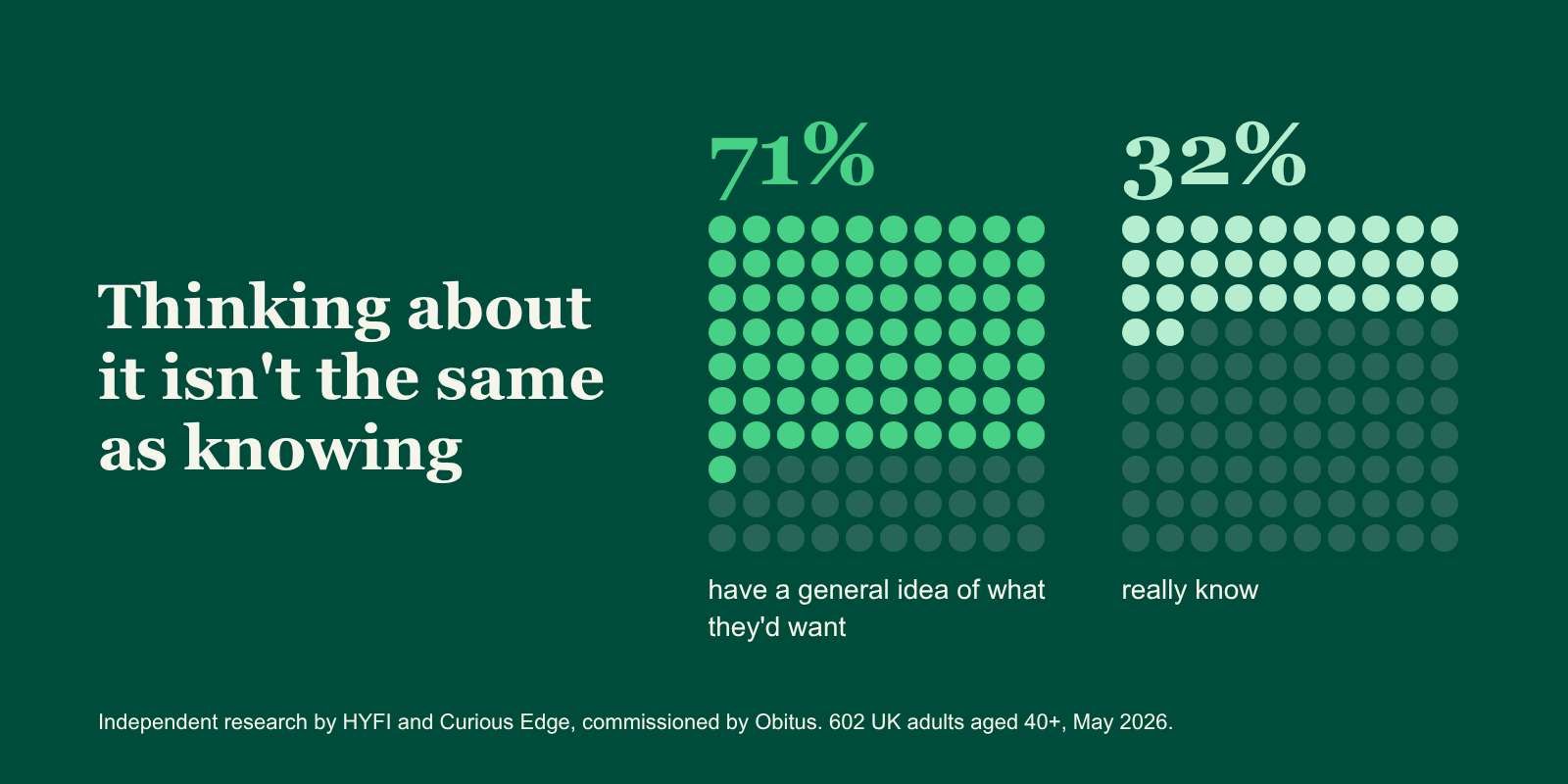
Most people have given their own funeral some thought. 71% have at least a general idea of what they'd want. But only 32% say they really know, and 26% have never talked about funeral wishes with anyone close to them, either theirs or someone else's.
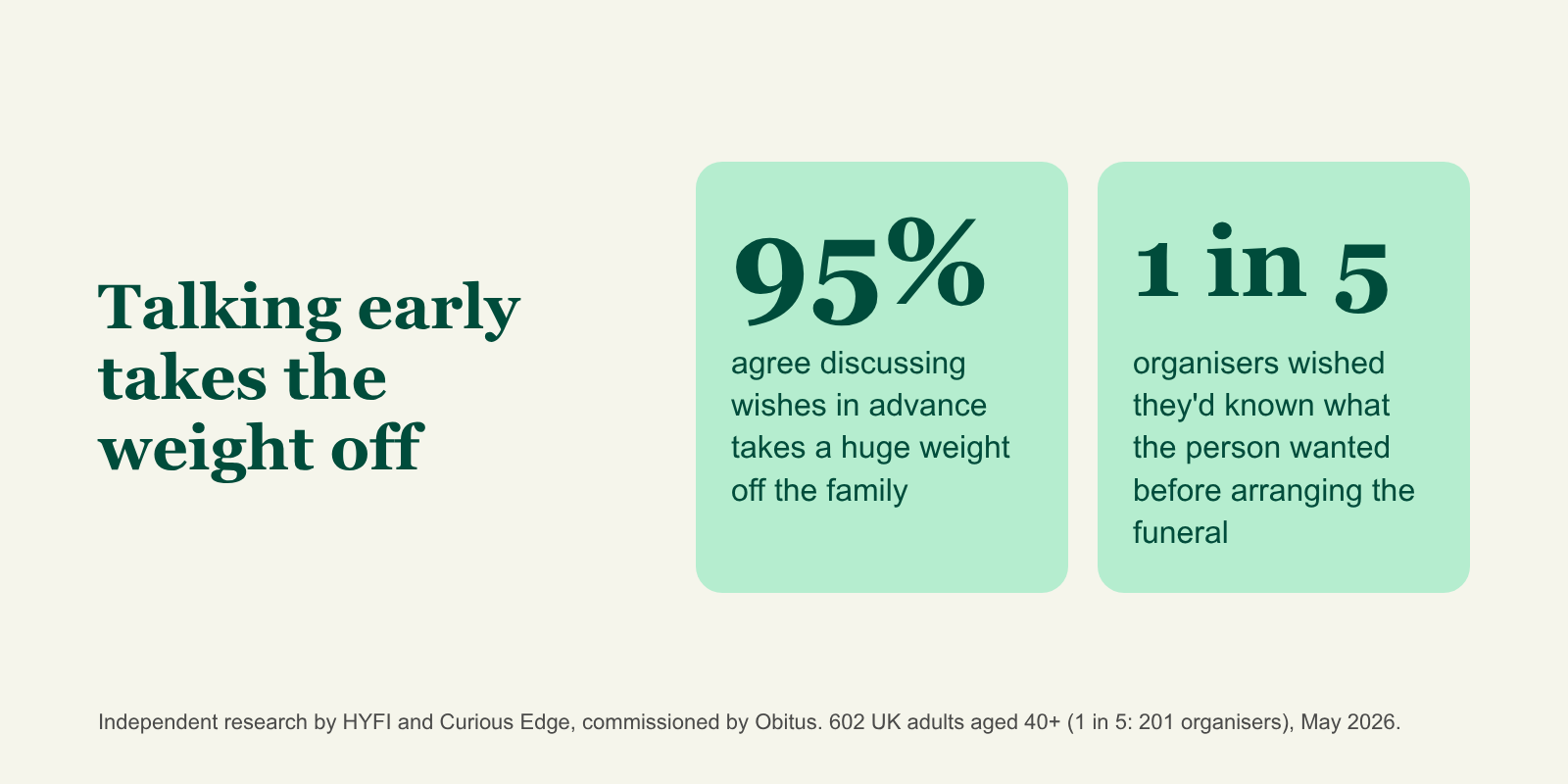
Almost everyone sees the value in talking. 95% agreed that sharing wishes in advance takes a huge weight off the family later.
The cost of not talking shows up later on. Asked what they wished they'd known before arranging a funeral, 20% answered with what the person had wanted. People who were thinking ahead expected the hardest parts to be honouring the person's wishes (30%) and handling disagreements in the family (24%).
Going through it seems to change things, though. People who'd arranged a funeral were more than three times as likely as those who'd only attended one to have written down their own wishes (20% compared with 6%).
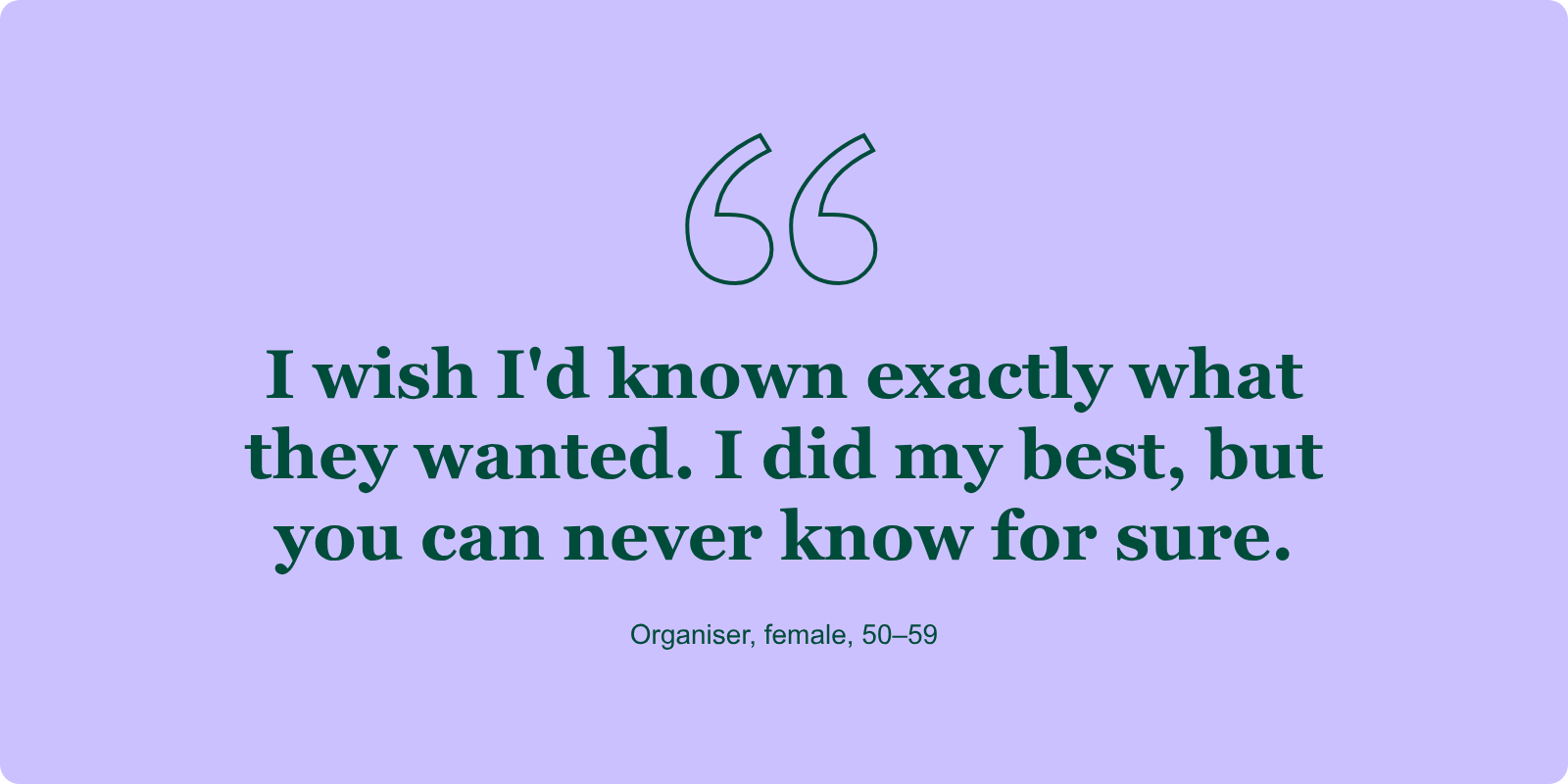
"I wish I'd known exactly what they wanted. I did my best, but you can never know for sure." Organiser, aged 50–59
"Tell us about Ron"
At SAIF National Education Day, our Customer Director, Stuart Ridley, talked about a simple way to start. Rather than opening with a list of options, open with the person: "Tell us about Ron."
You'll know better than us how often the answer points straight to the service. Say Ron supported a football club all his life and was a season ticket holder, and the family tell you everyone's coming in their blue kit. That one detail opens up a lot:
If the venue has our lighting enhancement, the room could be lit blue as people arrive
The music could include songs the fans sing, alongside the family's own choices
A tribute could bring together photos from matches over the years
Mates from the club who can't make it could watch on a live stream
The family don't necessarily need to know any of that's possible before they walk in. They just need someone to ask about Ron, and someone who knows what can be done.
Small details like that stay with people. When asked what stood out at the last funeral they'd been to or arranged, a quarter (25%) mentioned a dress code, such as bright colours or a sports kit.
Starting with the person
Families want the day to feel like the person, and most can't get there on their own. You're usually the one who helps them find the way, and it can start with something as simple as "tell us about them".
If any of this rings true, or doesn't, we'd love to hear from you at insights@obitus.com.
About the research: the survey was carried out independently by HYFI and Curious Edge, and commissioned by Obitus. 602 UK adults aged 40 and over took part online between 21 and 27 May 2026, nationally representative by age, gender and region.